They used this argument when we planned our family trip to Japan.
My husband and I like to plan vacations ourselves, and we include the kids in building the itinerary. For Japan, they actually sat down with us at the kitchen table with laptops open, debating attractions like we were deciding on a corporate acquisition.
Like a lot of people, I had given ChatGPT our flights, lodging, and family details and asked it to build an itinerary.
As a starting point.
I got two sentences into ChatGPT’s itinerary before my daughter interrupted. “We’re not using any of Chat’s ideas.”
“Okay,” I said. “How do you expect to plan this trip then?”
“TikTok. The recommendations are from REAL people. Not some computer recommendations.”
“TikTok isn’t going to tell me how long it takes to get from Tokyo Station to Hakone, or whether we’ll spend three hours standing in line. There is more to planning than finding cool places. And you know those people are paid to promote those experiences.” She didn’t miss a beat.
“Neither does Chat. It just summarizes whoever got paid to write about it.”
Touché. Then I stopped arguing. She wasn’t wrong.
TikTok had the latest and greatest places to go and things to do. ChatGPT could potentially pull outdated information. We finally agreed to use ChatGPT for logistics and the finer details. We used TikTok for experiences. Then we voted on the itinerary.
In the end, there was overlap between the two platforms, but everyone was happy. We paced the trip around our family’s energy and split up when our interests diverged. TikTok nailed the tea ceremony in Kyoto and go-karts in Tokyo. We skipped Tokyo Disney and the Pokémon Café. ChatGPT was very useful when we flip-flopped days because of reservation restrictions or rain.
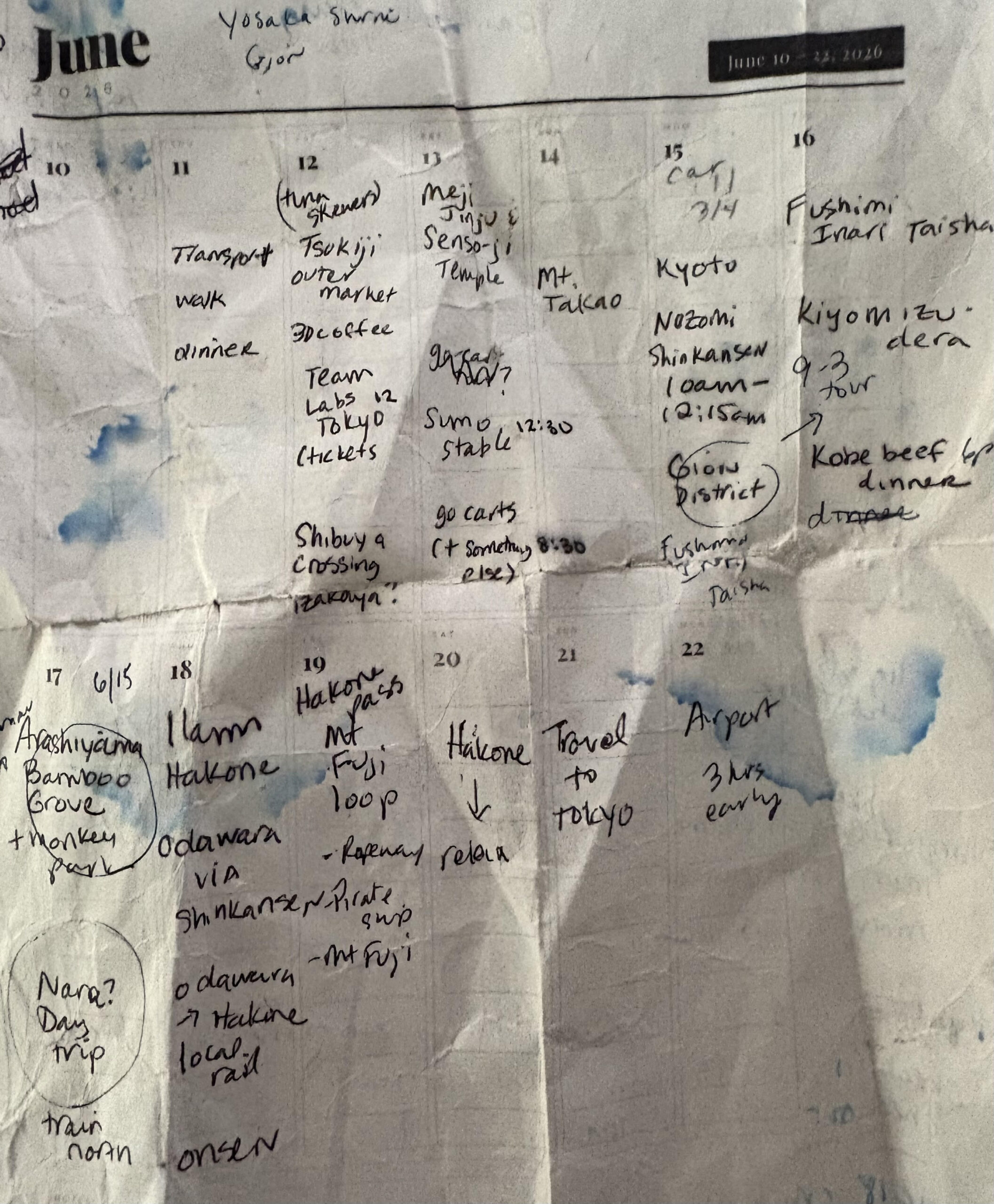
I put the highlights into a paper calendar. Yes, I printed a paper calendar. I’d rather cross something out with a pen than spend thirty minutes searching for cell service in the mountains.
Proof below.
As I looked back at the trip, I realized something.
We didn’t need better tools. We needed to understand what each tool was actually good at. Companies often find themselves in the same predicament.
I often step into organizations that have invested in great software, but they’re only using a fraction of what it’s capable of. Before spending money on another platform or hiring more people, it’s worth reviewing the functionality of the systems you already own.
You may already have what you need.
A few examples I have run into recently: Your systems don’t talk, so your data doesn’t either. Time tracking lives in one platform. Payroll lives in another. Since they never compare notes, it’s hard to tell whether it’s profitable. Connect the systems and suddenly you know which clients make money, which don’t, and where revenue is going.
Old data and new data live in different houses. Imagine your client’s history in one filing cabinet and today’s transactions in another. If those cabinets never compare notes, unusual activity doesn’t stand out. That’s often where fraud hides. Connect the two, and your systems can flag problems before they cost you your client’s trust.
You’re guessing when to grow instead of knowing. Demand lives in one system. Staffing, schedules, or inventory live in another. If no one is comparing the two, hiring is based on the team’s squeaky wheel. Connect demand to capacity AND revenue. Now you know if you can afford a new hire.
The answers you need shouldn’t be three logins away. They should be one report away.
Know your systems could be doing more? Let’s find out. Reply and tell me what you’re working with. Happy to talk through what you’ve got before you spend a dime on anything new.