Several years ago, we redesigned the first floor of our 1950s Chicago bungalow. Anyone who has worked with that era of housing knows the constraints of creating an “open concept”. Moving load-bearing walls come with big dollar signs. The dining room table sitting dead center in the middle of the house was another traffic bottleneck. Constant friction. It broke the flow of how we lived in the space.
There must be a solution I am not seeing. We have a living room, a rec room, and a finished basement. What are we using the family room at the back of the house for?
Then I saw it! We could move the dining area to the back of the house, expand the original living/dining space into a true great room, and repurpose the basement as the rec room as the kids got older. No need to move load-bearing walls. Massive improvement in flow. Digging deeper into a problem like that is the fine line between basic surface level-thinking and overanalyzing a situation where the opportunity cost ends up exceeds the benefit.
It’s called decision-grade analysis… * You dig below surface-level effects and obvious risks * You stop before analysis paralysis sets in, and decisions start to produce diminishing returns.
Decision-grade analysis leads to enhanced risk reduction, clear ownership, and quality downstream execution improvement.
I often see this imbalance when there is a lack of task ownership, unclear task hand-offs, or “that’s the way it’s always been done”.
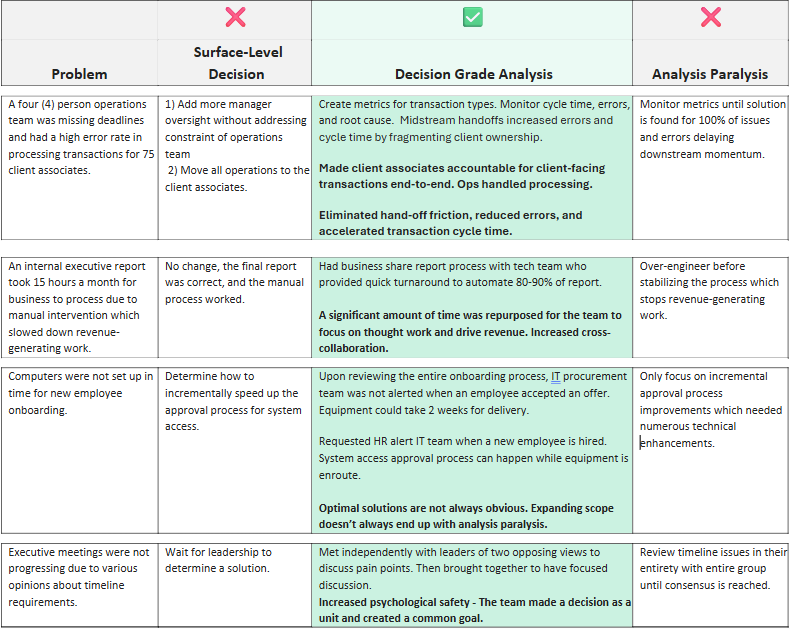
A few examples of how I have guided clients to optimize their decisions:
These are not strategy problems. They are decision problems, which lead to stalled work, sub-optimal results,and reduction in revenue. Thinking deeply as a team builds psychological safety and clarity of the work.
Friction is inevitable, but decision-grade analysis is how you respect time, talent, and momentum.